Best Eva Rubber Products for 2026 What You Need to Know?
As industries evolve, so does the need for quality materials. "Eva Rubber" is gaining attention for its versatility and durability. In the words of industry expert John Smith, "Eva Rubber offers unique benefits that can revolutionize product design."
With its lightweight nature, Eva Rubber products are increasingly popular across various sectors. They resist wear and tear, making them suitable for both indoor and outdoor use. The growing demand reflects a shift towards sustainable options. People are looking for materials that combine functionality and eco-friendliness.
However, not all Eva Rubber products are created equal. Some may fall short of expectations. Consumers should remain cautious. Researching and comparing options is crucial. As we approach 2026, understanding the best choices in Eva Rubber will help you make informed decisions.
Best Eva Rubber Products for 2026: Market Overview and Trends
The market for EVA rubber products is evolving rapidly. In 2026, we will see innovative designs focus on sustainability. The drive for eco-friendly materials increases, and consumers become more aware of their choices. Manufacturers now prioritize recyclability and biodegradability. This shift aims to reduce environmental impact.
Trends indicate a growing need for customizable EVA products. Athletes demand personalized gear, and hobbyists seek unique designs. This customization adds value and enhances user experience. However, quality control becomes a challenge. Not all options will meet high standards.
Looking ahead, urbanization is influencing the EVA market. Increasing urban outdoor activities boost demand for durable, weather-resistant products. Yet, not every product will endure harsh conditions. Users may face the disappointment of lower-quality items, leading to reflections on their choices. It’s essential to research and find reliable products, as the market expands and diversifies.
Key Features of High-Quality Eva Rubber Products in 2026
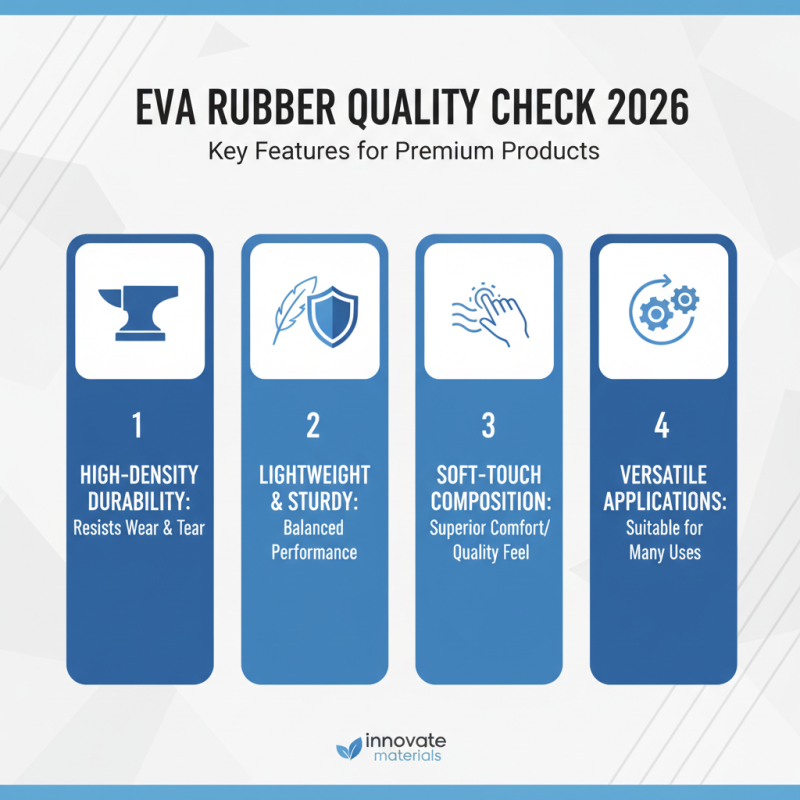
When exploring EVA rubber products in 2026, it’s crucial to identify key features that signify quality. High-density EVA rubber offers excellent durability. It resists wear and tear, making it suitable for various applications. Look for products that are lightweight yet sturdy. A material that feels soft to the touch can indicate a high-quality composition.
Another important feature is the product's flexibility. Good EVA products should maintain their shape under pressure. They should be able to provide comfort without compromising support. Additionally, check for water resistance. This is particularly vital for products exposed to moisture or uneven weather conditions.
Color stability is also a factor to consider. Products should retain their color over time without fading. Aesthetic appeal is essential, especially for consumer-facing items. Some listings may contain mixes of other materials, affecting performance. Testing different types helps in identifying the right fit. Quality inspection may reveal imperfections that require further assessment. Consumers should approach buying with both excitement and caution in 2026.
Top Industries Utilizing Eva Rubber Products: A Comprehensive Analysis
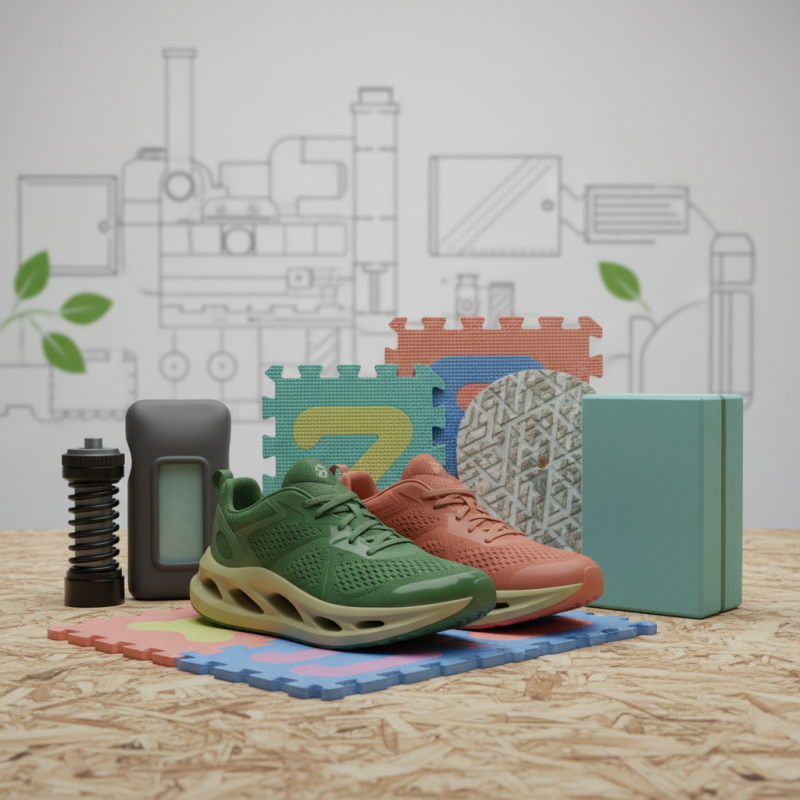
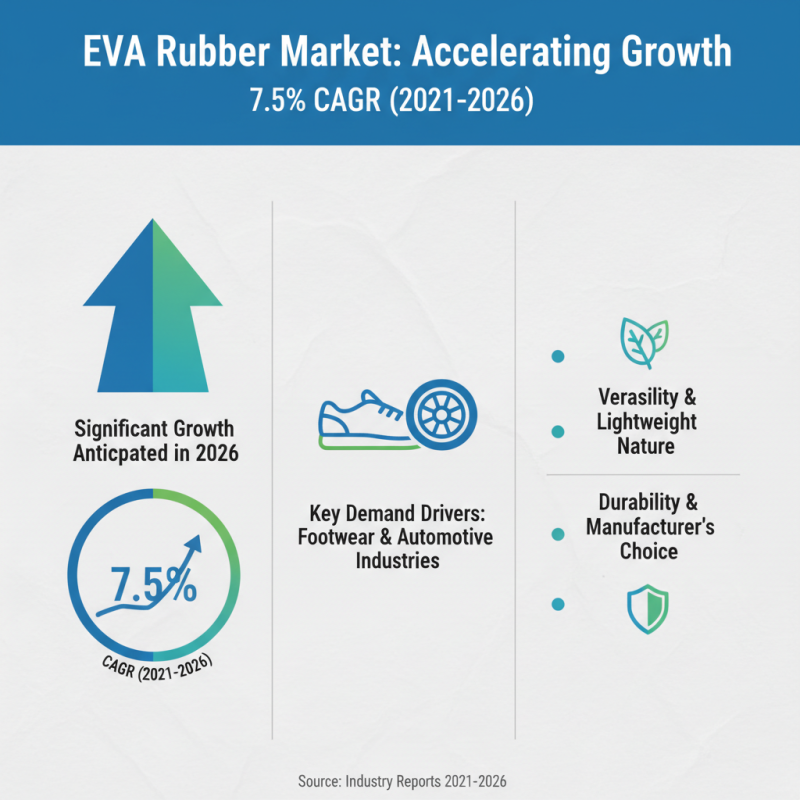
Eva rubber products are increasingly integral across various industries. They are known for their flexibility and durability. One sector leading the way is footwear. Shoes made from EVA rubber provide comfort and support. They are lightweight and resistant to wear. This makes them ideal for both athletic and casual footwear.
The automotive industry also benefits from EVA rubber. It is used in seals and gaskets. This enhances vehicle insulation and reduces noise. EVA rubber’s resistance to weathering adds to its appeal. Additionally, the packaging sector utilizes Eva rubber extensively. It provides lightweight options for shipping and storage. The cushioning properties help in protecting fragile items.
However, not all applications are perfect. Some manufacturers may overlook quality control. This can lead to variations in product performance. Sustainability is another concern. While EVA is versatile, its environmental impact requires careful consideration. Industries must reflect on these challenges and continue to innovate.
Best Eva Rubber Products for 2026
Environmental Impact and Sustainability of Eva Rubber Production in 2026
The environmental impact of EVA rubber production is a critical topic as we approach 2026. EVA, or ethylene-vinyl acetate, is known for its versatility in various applications. However, producing EVA rubber has both benefits and drawbacks that need thorough examination. The extraction of raw materials can lead to habitat destruction. This raises questions about biodiversity loss and ecosystem balance.
Sustainability in EVA production is becoming more pressing. Manufacturers are exploring greener alternatives and better recycling methods. Some techniques reduce waste during production. This is a step in the right direction, but the industry still faces challenges. Many synthetic materials contribute heavily to pollution. A shift towards sustainable practices is essential yet inconsistent across the board.
Consumer awareness plays a vital role in driving change. As people demand more eco-friendly products, EVA producers will have to adapt. Transparency in sourcing materials is crucial for building trust. It’s a complex landscape. While progress is visible, a collective effort is necessary to ensure a sustainable future for EVA rubber and the environment.
Best Eva Rubber Products for 2026 - Environmental Impact and Sustainability Overview
| Product Type |
Application |
Environmental Impact |
Sustainability Features |
Recycling Potential |
| Eva Foam |
Footwear, Sports Equipment |
Low carbon footprint, non-toxic |
Water-based adhesives, biodegradable options |
High; can be recycled into new products |
| Eva Rubber Sheets |
Mats, Insulation |
Sustainable sourcing, energy efficient |
100% recyclable, free from harmful chemicals |
Moderate; often reused in new industrial applications |
| Eva Rubber Granules |
Playgrounds, Gym Floors |
Durable and safe for children |
Low environmental impact, shock-absorbent |
High; frequently reused in surface applications |
| Eva Adhesives |
Bonding Materials |
Solvent-free, low VOC emissions |
Eco-friendly alternatives, water-based |
Limited; primarily for initial bonding |