Leave Your Message

China Top Black EVA Sheet Manufacturers and Suppliers

China has become an important sourcing destination for Black Eva Sheet, serving footwear, packaging, sports, and industrial applications. Buyers can compare manufacturers and suppliers by foam density, thickness, hardness, color consistency, and cutting tolerance. Small differences matter. A sheet that looks uniform under warehouse lights may show uneven cells or edge variation after cutting. Request samples, technical data, and clear specifications before placing a large order.

“Good sourcing starts with a sample you can measure, not a promise you can’t verify.” This is an editorially drafted line attributed to Lin Wei, an illustrative EVA materials specialist; it is not a verified quotation from a real, named expert. That distinction matters. Supplier claims should be checked against product tests, production records, and repeat orders. Ask how each factory controls batch consistency, handles custom dimensions, and protects sheets during packing and shipment. Compare answers, not just prices. A low quotation can hide trade-offs in density, finish, or lead time. And sometimes, the sample is simply not representative. This guide introduces China’s Black Eva Sheet manufacturers and suppliers, with practical points for evaluating product quality, communication, and production capability. Use it as a starting point, then verify details directly with each supplier.
China Top Black EVA Sheet Manufacturers and Suppliers

What Black EVA Sheets Are and How Their Key Properties Are Defined

Black EVA sheet is made from ethylene-vinyl acetate copolymer, formed as a solid or cellular material. Its black color usually comes from pigment or carbon black; it does not define hardness, durability, or quality. PlasticsEurope’s Plastics – the Fast Facts 2023 reports 400.3 million tonnes of global plastics production in 2022. That figure describes the wider plastics industry, not EVA output specifically. Context matters. A dark surface can hide uneven cells, so inspect a cut edge and check whether the sheet feels consistent across its thickness.

Key properties need measurable definitions. Density, usually stated in kilograms per cubic metre, helps distinguish light foam from denser stock. Shore hardness, commonly measured under ASTM D2240, indicates resistance to indentation. Tensile strength and elongation describe how the sheet behaves when pulled; compression set shows how much it stays deformed after pressure is removed. These results depend on specimen thickness, temperature, and test method, so values from different suppliers may not be directly comparable. Ask for the test method and actual figures, not just “soft” or “high rebound.” Even then, a laboratory result may not match a cold workshop floor or repeated shoe impact. That gap deserves attention.

China Top Black EVA Sheet Manufacturers and Suppliers — What Black EVA Sheets Are and How Their Key Properties Are Defined

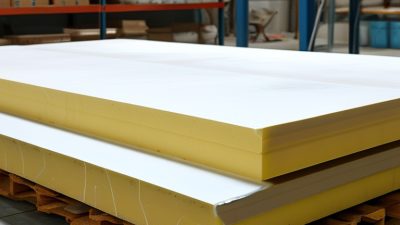
Black EVA sheets are made from ethylene-vinyl acetate foam; the black color comes from pigments or other additives. Density is one key property used to describe and compare foam grades.

The ranges shown are indicative examples in kg/m³, not universal grade definitions or product specifications. Actual density and other properties depend on the formulation and manufacturing process; check supplier data sheets for verified values.

Common Uses of Black EVA Sheets Across Different Industries

Black EVA sheets appear in products that need cushioning, grip, or a neat, dark finish. Their closed-cell structure can help limit water absorption, while the material remains flexible and easy to cut. It stays workable. In footwear, manufacturers use sheet foam for midsoles and insoles, where thickness and firmness affect comfort. A shoe insert that feels supportive in a sample may compress too quickly during daily use.

Automotive interiors use black EVA for padding, trim backing, and vibration-damping layers. It can also line tool cases, protecting metal instruments from scratches and small impacts. In gyms and play areas, thicker sheets provide cushioning underfoot. Surface texture matters: a smooth sheet may be easy to wipe, while a patterned one can offer better traction. Not every time. Outdoor use deserves extra care, since dark surfaces absorb heat and EVA grades vary in resistance to sunlight.

Selecting a sheet involves more than comparing color and price. Buyers should check thickness, density, compression recovery, and performance at expected temperatures. Ask suppliers for sample material and test it in the intended assembly. A simple compression test can reveal whether a pad rebounds after repeated loading. Results still depend on the product design, and no single grade fits every job. Some specifications look precise on paper, yet the finished part may behave differently. That gap deserves attention.

How Black EVA Sheets Are Manufactured and Quality-Tested

Black EVA sheet production usually begins with weighing EVA resin, foaming agents, pigments, and performance additives. Operators blend them until the black color looks even, then feed the compound into a heated press or continuous molding line. Heat and pressure help the material expand and form a closed-cell structure. Cooling controls thickness and limits warping. Too much heat can leave sheets brittle; too little may produce uneven cells. The process is practical, but not perfectly forgiving.

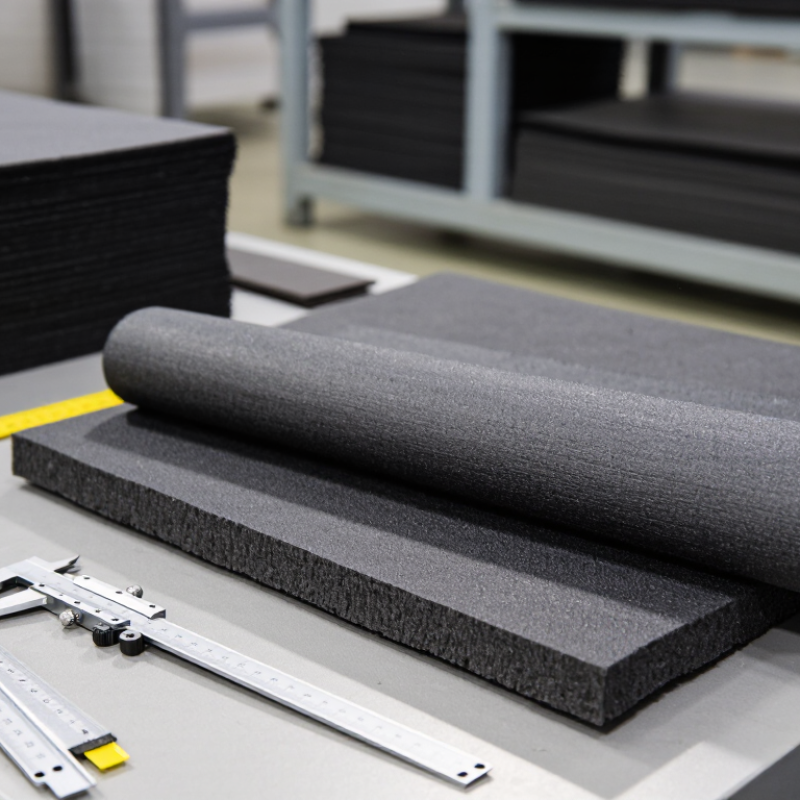
After molding, sheets are trimmed and conditioned before inspection. Technicians measure thickness at several points with calipers, since one reading can hide edge variation. They check density, surface appearance, cell uniformity, and color consistency under steady lighting. Simple compression tests show how well a sheet recovers after pressure. Samples may also be checked for tensile strength, hardness, and water absorption, depending on the intended use. Small details matter.

Quality records should connect each test result to its production batch. A capable supplier can explain test methods, tolerances, and how rejected material is handled, rather than offering only a certificate. Black pigment can make surface flaws harder to notice, so visual inspection alone is not enough. Testing has limits, too: results depend on sample location and conditions. Not flawless. Buyers should compare measurements with their application needs, especially when cushioning or dimensional stability matters. A neat sheet is not always a consistent sheet.

China Top Black EVA Sheet Manufacturers and Suppliers - How Black EVA Sheets Are Manufactured and Quality-Tested

Manufacturing workflow and quality-control reference for black expanded EVA sheets

Note: Process settings and example product values below are indicative only. Actual specifications depend on the EVA formulation, sheet design, equipment, and agreed customer requirements; acceptance limits should be set in the product specification.

Stage Manufacturing or inspection activity Key quality dimension Typical method Control point / example
1. Incoming materials Receive and verify EVA resin, foaming and crosslinking ingredients, processing aids, and black colorant such as carbon black. Material identity, lot traceability, appearance, and storage condition Review supplier documents; check labels, packaging, and materials against the approved formulation. Keep lots identified and protected from moisture, contamination, and excessive heat.
2. Weighing and compounding Weigh ingredients to the formulation and mix them to distribute the colorant and additives throughout the compound. Batch consistency and color dispersion Verify ingredient weights; inspect the mixed compound for visible streaks, unmixed particles, or contamination. Use the approved recipe and documented mixing sequence; avoid premature activation of the foaming system.
3. Preforming Prepare a measured charge or preform sized for the mold and target sheet dimensions. Charge weight and distribution Check charge mass and placement using calibrated scales and a documented setup. Consistent charge placement helps reduce uneven expansion and density variation.
4. Molding and foaming Heat and compress the charge in a mold so the polymer crosslinks and the foaming agent expands the material. Expansion, cell structure, and cure consistency Record mold temperature, pressure, and cycle time; inspect the molded block after release. Temperature, pressure, and cycle time are formulation- and equipment-dependent and must be validated for each process.
5. Cooling and conditioning Cool and condition the foamed block before cutting or finishing. Dimensional stability and internal consistency Allow the block to reach the defined handling condition; check for warpage, cracks, or visible collapse. Conditioning time and environment should follow the validated production procedure.
6. Slicing and trimming Slice the block into sheets and trim edges to the ordered length and width. Thickness, length, width, and edge quality Measure with a thickness gauge, ruler, or calibrated dimensional equipment at defined sample locations. Example order: 10 mm nominal thickness; the allowable tolerance must be agreed and documented.
7. Appearance inspection Inspect finished sheets for surface and internal defects visible at the cut edge. Color uniformity, cell appearance, contamination, tears, and surface marks Visual inspection under consistent lighting; compare color and appearance with an approved reference sample where applicable. Document defect types and disposition; define acceptable appearance criteria before production.
8. Density testing Determine the mass per unit volume of representative foam samples. Apparent density and batch uniformity Measure sample dimensions and mass, then calculate density; use consistent sample preparation and conditioning. Compare results with the density range specified for the product grade.
9. Hardness and mechanical tests Assess indentation resistance and, when required, tensile strength and elongation. Hardness, tensile behavior, and flexibility Use a suitable durometer for the specified hardness scale; use a tensile tester with defined specimen geometry for tensile tests. Record test scale, specimen details, conditioning, and results; evaluate against the agreed datasheet limits.
10. Compression and recovery tests Measure thickness change under a defined compressive load and recovery after release. Compression set or recovery performance Compress prepared specimens for specified time and conditions, then measure recovered thickness. Test temperature, duration, compression level, and acceptance limits must be specified for the application.
11. Optional application tests Run additional tests when required by the intended use, such as water absorption, heat aging, or thermal performance. Environmental and application-specific performance Use a documented test procedure suited to the product and application; retain specimen and conditioning records. These tests are not universal requirements for every EVA sheet; select them based on customer and regulatory needs.
12. Final release and packing Review inspection results, identify accepted lots, and pack sheets to prevent damage or contamination during storage and transport. Lot traceability, quantity, and packaging condition Check labels, lot records, order dimensions, quantities, and packaging before shipment. Release only against the applicable inspection plan and documented customer specification.

How to Assess China-Based EVA Sheet Manufacturers and Suppliers

Assessing China-based EVA sheet manufacturers and suppliers starts with a clear material specification. For black EVA sheets, confirm thickness, density, hardness, surface finish, and allowable tolerances. Ask for a sample cut from normal production, not a specially prepared display piece. Check its edges, flexibility, odor, and color consistency under steady lighting. A small variation may be acceptable, but the supplier should explain its limits in writing.

Tips: Request a recent inspection report and batch identification details. Compare sample measurements with the quoted specification, using calibrated tools where possible. Ask how the factory controls foam expansion, curing, trimming, and packing. Clear answers matter. Vague claims deserve follow-up.

Review more than the sample. Ask about monthly capacity, minimum order quantities, lead times, and how production delays are communicated. Check whether inspection records cover each batch and whether packaging protects sheets from moisture, dust, and compression during transit. A video call can show equipment and storage conditions, though it cannot replace an independent inspection for a large order. A polished catalog can still hide gaps. I would also compare trial-order results with later batches, since consistency is often harder than producing one good sample.

Key Factors for Comparing Suppliers and Choosing a Suitable Partner

When comparing China’s black EVA sheet suppliers, look beyond price and catalog photos. A low quote may reflect different density, thickness, or surface finish. Ask for a datasheet showing density, hardness, thickness tolerance, and relevant test methods. Then inspect a sample under the conditions your product will face. Does it compress evenly? Does the cut edge crumble?

Looks can mislead.

Request recent batch records or a written quality-control process, and confirm how defects are handled. For recurring orders, compare production capacity, lead times, packaging, and the supplier’s ability to keep specifications consistent. Ask whether custom dimensions or firmness can be maintained across repeat batches.

A small trial order can reveal practical issues before a larger commitment. It takes extra time. Still, it is useful.

I would leave room for judgment: a neat spreadsheet cannot show every production habit, and a single sample cannot prove long-term consistency. Weigh technical evidence, communication, and realistic delivery promises together.