Leave Your Message

Why Choose EVA Material for Global Sourcing?

Why Choose EVA Material for Global Sourcing? The answer begins with proven performance, not fashionable claims. EVA Material combines flexibility, adhesion, low processing complexity, and broad availability. These qualities support applications ranging from photovoltaic encapsulation to footwear, packaging, and protective components.

The scale is significant. The IEA PVPS Trends 2024 report recorded approximately 456 gigawatts of new global photovoltaic capacity in 2023. This growth increases demand for reliable encapsulant materials. NREL researcher Dr. Michael J. Kempe has stated, “EVA is the most widely used encapsulant material in photovoltaic modules.” His observation reflects years of research into moisture, heat, and ultraviolet degradation. Fraunhofer ISE’s Photovoltaics Report also identifies EVA as a major commercial encapsulant option.

Sourcing managers still need discipline. EVA grades differ in vinyl acetate content, melt flow, curing behavior, and additive packages. A sample may look identical but perform differently after years of sunlight. That detail matters. Buyers should compare technical data sheets, batch consistency, testing records, and supplier experience. They should also review production capacity and backup supply routes.

The material is practical. It is not flawless. EVA can generate acetic acid during aging, especially under moisture and heat. Better formulation and module design can reduce this risk, but they cannot erase it. Global sourcing therefore requires laboratory validation, transparent documentation, and realistic lead-time planning. Reports provide direction. Actual testing provides confidence.

Why Choose EVA Material for Global Sourcing?

EVA Resin Basics: 10–40% Vinyl Acetate Content and Tunable Melt Flow

Why Choose EVA Material for Global Sourcing?

EVA resin combines polyethylene strength with vinyl acetate flexibility. For global sourcing, its 10–40% vinyl acetate range offers useful design control. At about 10% VA, the material usually feels firmer and shows better stiffness. Higher VA levels can improve softness, elasticity, adhesion, and low-temperature performance. The trade-off is easy to underestimate. More VA may reduce rigidity and alter processing behavior.

Melt flow is equally important. A tunable melt flow rate helps manufacturers match the resin with films, sheets, foams, adhesives, or molded parts. Higher flow can fill thin cavities and support faster processing. Lower flow may provide better melt strength during extrusion. These effects depend on temperature, equipment, and product geometry. A material that worked well in one factory may behave differently elsewhere.

During supplier evaluation, request the VA percentage, melt flow rate, density, and test conditions. Compare results using the same recognized method, such as ISO 1133 or ASTM D1238. Do not compare melt flow numbers without checking temperature and load. I have seen sourcing teams select a resin from one number alone. That approach caused uneven thickness and unstable output. A practical trial should include pellets, drying conditions, screw settings, and finished-part checks. Keep a small production sample for later comparison. Specifications matter, but real processing evidence matters too.

Material Performance: 0.93–0.96 g/cm³ Density and Flexible Foam Structure

Why Choose EVA Material for Global Sourcing?

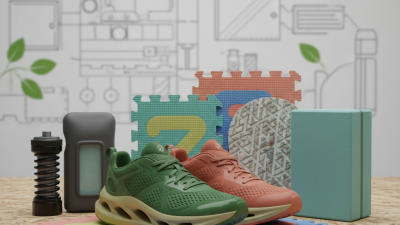
Material selection becomes clearer when density is separated from foam performance. EVA resin commonly measures 0.93–0.96 g/cm³, a range reported across technical polymer databases. This value describes the solid material, not the final foam. That distinction matters. During expansion, closed cells reduce bulk density and create a lighter, flexible structure. ISO 1183-1 supports resin-density measurement, while ISO 845 specifies density testing for cellular plastics.

0.93–0.96 g/cm³
EVA resin commonly measures

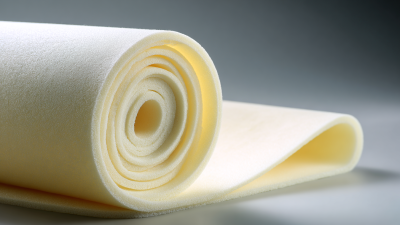
EVA’s foam structure can cushion repeated impact, soften edges, and maintain flexibility across many everyday applications. Its resilience depends on vinyl acetate content, cell size, processing temperature, and compression history. A denser foam may feel firmer and resist deformation better. A lower-density foam may feel softer but lose thickness sooner. Small errors compound. Purchasers should request density, hardness, compression set, and dimensional-change data from each production lot. A single density number is not enough.

400.3 million tonnes
Plastics production in 2022

The wider supply market also rewards disciplined material evaluation. PlasticsEurope reported global plastics production at 400.3 million tonnes in 2022, highlighting the scale of polymer sourcing and its quality-control demands. For EVA procurement, buyers should compare test methods, not only supplier figures. Foam density should be verified under ISO 845 conditions, with samples taken from different areas. Some specifications remain imperfect because laboratory results may not mirror warehouse heat, humidity, or repeated loading. That limitation deserves attention.

Application Match: EVA Foam Densities Commonly Range from 30–300 kg/m³

Why Choose EVA Material for Global Sourcing?

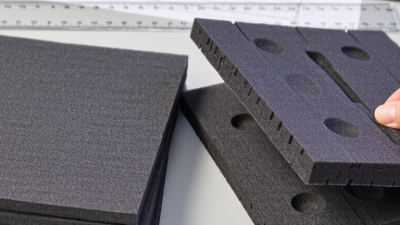
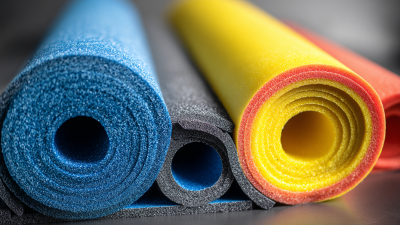
EVA foam is not a single-purpose material. Its density commonly ranges from 30 to 300 kg/m³, creating a practical match between softness, support, and impact protection. At 30–70 kg/m³, foam feels light and flexible, making it suitable for cushioning, sports padding, and protective wraps. Higher-density grades, around 150–300 kg/m³, provide firmer support for tool inserts, industrial mats, and structured packaging.

Density alone can mislead purchasing teams. ISO 845 specifies how cellular materials should be tested for apparent density, while ASTM D3575 addresses flexible olefin-based foams. These standards improve supplier comparisons, but they do not replace product testing. A 2024 industry market assessment projects EVA foam demand to grow at roughly 5% annually, although estimates differ by region and application scope. Packaging and footwear remain major demand areas.

For global sourcing, request density tolerance, compression-set data, hardness, cell structure, and water absorption results. A 60 kg/m³ sheet may protect delicate goods, yet collapse under repeated loading. A 200 kg/m³ sheet may last longer, but increase shipping weight and cost. That trade-off matters. My own sourcing review would also question whether the quoted density is measured before or after lamination. Small test differences can change the application match.

Sourcing Compliance: Screen REACH, RoHS, ASTM, and ISO 9001 Requirements

EVA is valued in global sourcing for its flexibility, cushioning, light weight, and resistance to moisture. Yet material performance is only half the decision. Compliance evidence must travel with every purchase order. The European Chemicals Agency’s REF-10 enforcement report found that 18% of inspected products failed at least one chemical requirement. That figure is uncomfortable.

For EVA products, screen REACH restrictions and request current supplier declarations, safety data, and laboratory results. RoHS checks are essential when EVA appears in cables, housings, or electronic accessories. ASTM requirements should match the application, such as compression set, tensile strength, or slip resistance. ISO 9001 does not certify EVA itself. It evaluates the supplier’s quality management system. The ISO Survey has recorded more than one million valid ISO 9001 certificates worldwide, showing its broad sourcing relevance.

A reliable audit should trace resin batches, colorants, additives, and production dates. Ask for test samples from actual production, not only polished samples. Accredited laboratory testing adds confidence, but paperwork can still contain gaps. A checklist alone is not enough. One overlooked adhesive may change the compliance result. Periodic retesting is sensible after formula, factory, or regulatory changes. For global sourcing, EVA selection should combine physical performance with documented REACH, RoHS, ASTM, and ISO 9001 controls.

Supplier Evaluation: Compare VA Grade, MOQ, Lead Time, Cost, and Certifications

EVA sourcing starts with the right VA grade, not the lowest quotation. Vinyl acetate content affects softness, flexibility, sealing, and resilience. Lower VA grades often suit firmer sheets and protective inserts. Higher VA grades feel softer and compress more easily. Ask suppliers for density, hardness, and recovery data from the actual production batch. Samples can mislead when factories change formulations.

MOQ deserves equal attention. A supplier may quote an attractive unit price but require several tons per color. That inventory can occupy valuable warehouse space for months. Request MOQs by grade, color, thickness, and packaging format. Lead time should include material preparation, production, inspection, and export handling. In my sourcing work, a fourteen-day factory promise became thirty-one days after testing delays. I now request a dated production schedule, not a casual estimate.

Compare total cost, including tooling, sampling, freight, waste, and payment terms. The cheapest EVA sheet may create trimming losses or inconsistent thickness. Certification claims also need verification. Request current test reports, scope, laboratory details, and batch traceability. Match documents to the destination market and intended use. One weakness remains: forecasts are rarely accurate. Keep a realistic buffer, but avoid excessive stock. A small pilot order can expose odor, color variation, and compression issues before wider purchasing begins.

Why Choose EVA Material for Global Sourcing?

Supplier evaluation benchmark comparing VA grade, MOQ, lead time, cost, and common compliance certifications.

EVA Material Profile VA Grade Typical MOQ Lead Time Indicative Cost Common Certifications
Standard general-purpose EVA 18% VA About 500 kg About 14 days US$2.20/kg REACH, RoHS
High-elasticity EVA 28% VA About 1,000 kg About 21 days US$2.85/kg REACH, RoHS, ISO 9001
Low-density closed-cell EVA 22% VA About 750 kg About 18 days US$2.60/kg REACH, RoHS

The chart uses a 1–10 sourcing suitability index, where a higher score indicates a more favorable balance of material performance, minimum order quantity, delivery speed, cost, and certification coverage. Costs and lead times are indicative bulk-order benchmarks and should be confirmed by quotation, region, formulation, and production capacity.