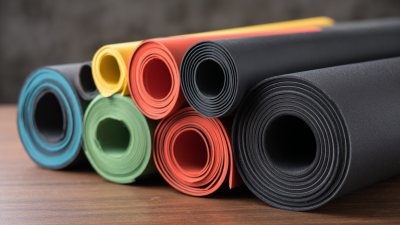
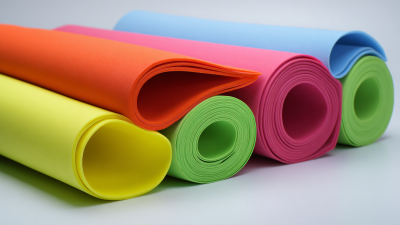
10 Best EVA Foam Sheet Suppliers for Global Buyers?
Choosing the right Eva Foam Sheet supplier is rarely as simple as comparing prices. Global buyers must examine density, thickness tolerance, surface finish, color consistency, and production capacity. A sheet that looks smooth under showroom lights may show uneven cells after cutting. Small defects can become expensive during packaging, footwear, sports protection, toys, or industrial fabrication.
Polymer-materials author Dr. George Wypych offers a useful principle: “Material performance must match the application.” This idea should guide every supplier review. Reliable manufacturers provide technical data, sample approval, batch records, and clear communication about raw materials. They should also explain whether the foam is closed-cell, cross-linked, laminated, flame-retardant, recyclable, or customized. Claims need evidence. A polished website is not enough.
This guide evaluates ten Eva Foam Sheet suppliers for global buyers. It considers manufacturing experience, export support, quality-control systems, customization, minimum order quantities, and delivery reliability. Practical details matter. Can the supplier maintain a 10-millimeter thickness across large rolls? Can it protect sheets from compression during ocean transport? Can it reproduce the same blue color six months later?
No ranking is perfect. Supplier strengths change by region, order size, and application. Buyers may also overlook communication delays or inconsistent documentation. That is worth questioning. The best partner is not always the cheapest manufacturer. It is the supplier that performs consistently, responds honestly, and helps solve problems before they reach the production line.
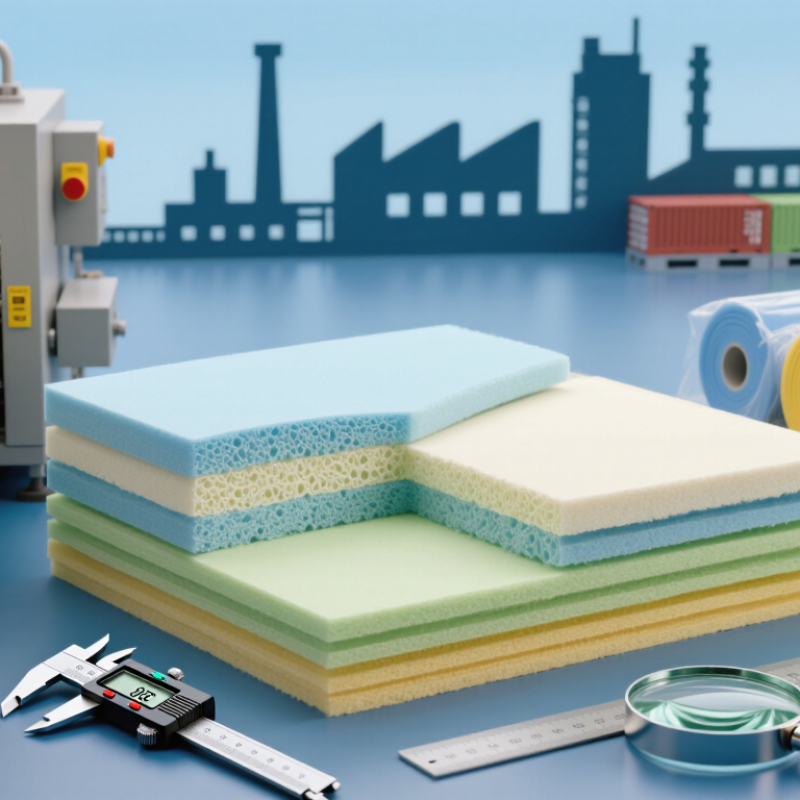
EVA Foam Fundamentals: 5–40% VA Content and 25–250 kg/m³ Density
EVA foam selection begins with two numbers: vinyl acetate content and density. VA content usually ranges from 5% to 40%. Lower VA grades feel firmer and process more like polyethylene. Higher VA grades provide greater flexibility, softness, and impact absorption. Density commonly spans 25–250 kg/m³, according to technical product surveys and converter specifications.
A 25–60 kg/m³ sheet suits lightweight packaging, cosplay structures, and protective inserts. Medium grades around 70–150 kg/m³ offer better compression resistance for flooring, mats, and sports padding. Dense sheets above 180 kg/m³ support heavier loads, but they may feel less comfortable. Grand View Research’s 2024 market analysis identifies packaging, footwear, and sports products as major demand areas. Its published forecasts indicate roughly 5% annual growth, although estimates differ by product scope. That uncertainty deserves attention.
Tips:
Request samples across three densities. Measure compression recovery after repeated loading. Also check VA content, thickness tolerance, cell structure, and water absorption. ASTM D3575 test methods can support more consistent comparisons. A supplier’s attractive price can hide uneven cells or unstable thickness. I have seen this mistake.
Higher VA is not automatically better. It can improve flexibility, yet it may reduce stiffness and alter heat-sealing behavior. Density alone also misleads. Two sheets with equal density can perform differently because of cell size, crosslinking, and processing history. Review test data, not only catalog claims.
Supplier Evaluation Metrics: ASTM D3575, ISO 845, and Compression Set Testing
For global EVA foam buyers, supplier quality begins with measurable evidence, not attractive samples. ASTM D3575 evaluates flexible olefin foam properties, including density, tensile strength, and compression behavior. ISO 845 measures apparent density, helping buyers compare 40 kg/m³ foam with lighter 25 kg/m³ grades under consistent conditions. Density alone is not enough. Two sheets can match in weight but recover differently after pressure.
Compression set testing shows how much thickness remains lost after sustained loading. Ask suppliers for test temperature, loading time, specimen size, and recovery period. Without these details, “low compression set” is only a sales phrase. ASTM D3575 results should be reviewed beside the applicable compression set method, such as ISO 1856, when long-term cushioning matters.
A 2024 market assessment by Grand View Research estimated continued growth in the global EVA foam market, increasing the need for comparable procurement data. The number is useful, but market forecasts are not laboratory proof.
Tips: Request three production-lot reports, not one certificate. Measure thickness at several points with a calibrated gauge. Keep retained samples for rechecking after shipment. I have seen small density variations change cutting yield and edge recovery. That detail is easy to miss. Also, supplier reports may use different conditioning periods, making direct comparison imperfect. Ask for raw readings, laboratory accreditation, and test dates before ranking the best suppliers.
10 Best EVA Foam Sheet Suppliers: Capacity, Certifications, and Product Range
Choosing among the 10 best EVA foam sheet suppliers requires more than comparing prices. Global buyers should examine production capacity, certification records, and product range together. A dependable supplier can state monthly output, standard sheet dimensions, minimum order quantities, and realistic lead times. Ask whether capacity remains stable during seasonal demand. Numbers without production evidence deserve caution.
Certifications should match the intended application. Request current quality-management certificates, material test reports, and safety documents for each shipment. For children’s products, packaging, or industrial use, verify relevant chemical, flammability, and environmental requirements in the destination market. A certificate alone proves little. Check its scope, issuing body, expiry date, and product coverage. This step is often skipped.
Product range also reveals technical maturity. Strong suppliers may offer cross-linked and non-cross-linked EVA, different densities, closed-cell structures, adhesive-backed sheets, rolls, and custom colors. Thickness options can range from thin craft sheets to heavy cushioning panels. Ask for samples. Measure thickness at several points, inspect surface uniformity, and test compression recovery after repeated loading. I have seen attractive samples fail during cutting because density varied across one sheet. That mistake costs more than a slightly higher quotation. A capable supplier should explain tolerances, tooling limits, packing methods, and corrective procedures without vague promises.
Global Buyer Checklist: MOQ, Lead Time, Incoterms, REACH, and RoHS Compliance
When comparing EVA foam sheet suppliers, global buyers should test the checklist before testing the sample. Ask for MOQ by thickness, color, density, and surface finish. A low MOQ may hide higher tooling or packing costs. Request a written lead-time split: raw material booking, production, inspection, and port delivery. The World Bank’s 2023 Logistics Performance Index shows that border procedures and shipment reliability still vary widely between markets. Build buffer days into every purchase plan.
Incoterms must match your actual logistics control. Under Incoterms 2020, FOB, CIF, DAP, and DDP place different responsibilities on freight, insurance, customs, and risk transfer. Confirm the named destination and charges in writing. Do not accept “door delivery” without checking import-tax responsibility. Small wording errors can become expensive. I have seen buyers compare unit prices while ignoring destination fees.
For compliance, request a current REACH declaration, SVHC screening statement, and RoHS test report for the exact EVA formulation. The European Chemicals Agency regularly updates its Candidate List, so an old declaration deserves careful review. The European Commission identifies ten restricted substance groups under RoHS, including lead, mercury, and certain phthalates. Ask for laboratory methods, test dates, sample identification, and report numbers. Also verify whether adhesives, pigments, liners, and printed surfaces were tested. A compliant base sheet may not mean a compliant finished product. Keep these records with purchase orders and batch numbers. Mistakes happen, especially when specifications change quietly.