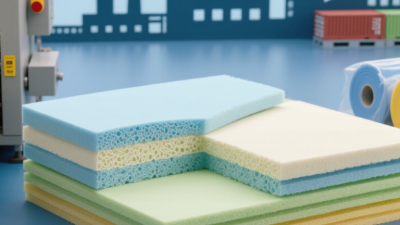
Choosing the right Eva Foam Roll in 2026 requires more than comparing color, price, or surface finish. Global buyers must examine density, thickness, cell structure, hardness, compression set, water absorption, and dimensional tolerance. These details affect packaging, flooring, sports equipment, insulation, footwear, marine products, and protective linings.
Dr. George Wypych, a recognized polymer-materials author, has stated, “Foam performance depends on its structure, not its appearance.” This principle matters when evaluating cross-linked, non-cross-linked, laminated, adhesive-backed, and textured Eva Foam Roll types. A smooth black roll may look suitable, yet it can fail under repeated compression or high heat. A lighter roll may reduce shipping cost, but it may not provide enough impact protection. Small differences matter.
For international purchasing, buyers should request technical data sheets, batch samples, test reports, and clear production tolerances. They should also confirm roll width, usable length, core size, packing method, and loading conditions. Closed-cell EVA often suits moisture-sensitive applications. Cross-linked EVA usually offers better resilience and surface stability. Laminated rolls can add appearance or bonding performance. Adhesive-backed versions may save labor, but adhesive aging requires careful review.
No single roll wins every application. That is easy to forget. Supplier claims also need verification through sample testing and documented specifications. This guide compares the best Eva Foam Roll types for global buyers in 2026, balancing performance, processing needs, compliance expectations, and total delivered cost. The ideal choice is not always the cheapest one. Sometimes, it is the roll that performs consistently after months of use.
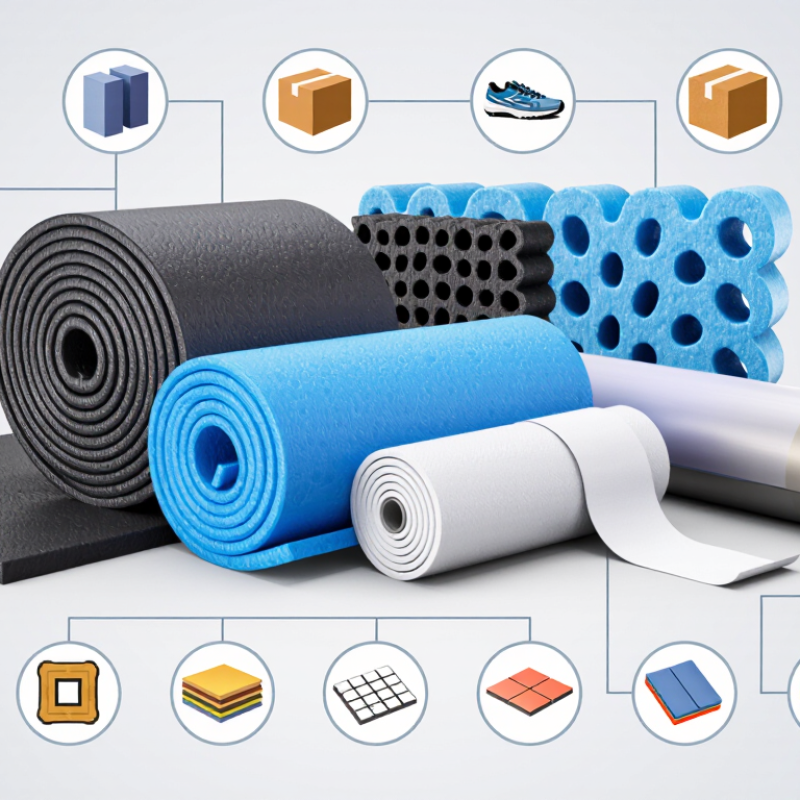
EVA foam is a closed-cell material made from ethylene and vinyl acetate. Its foam structure provides low water absorption, cushioning, flexibility, and useful thermal insulation. Vinyl acetate content changes softness, elasticity, and processing behavior. Buyers should not treat every EVA roll as interchangeable.
Roll form matters because continuous sheets reduce cutting waste and simplify high-volume converting. Wide rolls suit floor protection, packaging inserts, sports padding, and industrial gaskets. Narrow rolls can improve handling when production lines have limited space. Thickness consistency is critical. A small variation can affect cushioning, lamination, and final dimensions. It sounds minor. It is not.
Grand View Research valued the global EVA foam market at approximately USD 4 billion in 2023 and expects continued growth through the decade. Fortune Business Insights also identifies packaging, footwear, and automotive applications as important demand areas. These reports support stronger interest in standardized roll products, but forecasts remain estimates. Buyers should verify density, hardness, cell structure, tensile strength, and compression set through independent testing. In practical converting, a softer roll may reduce cutting noise, yet it can deform during storage. That trade-off is easy to overlook. Moisture, heat, and uneven winding can also create defects before production begins. Supplier data helps, but physical samples still deserve careful review.

EVA foam rolls are not classified by appearance alone. Their internal structure controls performance during converting and use. Closed-cell foam has sealed pores, low water absorption, and stable cushioning. Open-cell foam feels softer and permits more air movement, but it may absorb moisture. Cross-linked EVA usually provides stronger recovery and better dimensional stability. Non-cross-linked EVA is easier to thermoform, yet it may show greater permanent compression. That difference matters.
In factory inspections, I check the cut edge, surface uniformity, and roll tension. A clean edge often reveals consistent cell structure. Density and thickness also divide products into practical categories. Lightweight rolls suit padding and craft applications. Higher-density rolls support impact protection and durable floor layers. Laminated rolls add a fabric, film, or adhesive surface. Embossed rolls improve grip. However, surface texture can hide uneven thickness. I have seen attractive rolls fail after repeated bending.
Performance classification should include resilience, compression set, tensile strength, tear resistance, water absorption, and thermal behavior. Buyers should compare test results under similar conditions. A roll with excellent softness may perform poorly under constant load. One with high density may feel too rigid during installation. Samples should be tested after cutting, bending, heating, and storage. Request batch information and inspection records. Supplier claims need verification. Even experienced buyers can overvalue a single number, especially when actual service conditions remain unclear.
Choosing an EVA foam roll starts with the application, not the lowest quoted price. Its closed-cell structure supports cushioning, insulation, and buoyancy. Grand View Research valued the global EVA foam market at approximately US$2.4 billion in 2023. Its report also projects continued growth through 2030. Footwear and protective inserts usually need flexible, fine-cell rolls. Gym flooring requires higher density, grip, and compression recovery. Packaging often favors lighter foam that can be die-cut cleanly. A common purchasing mistake is treating every EVA roll as interchangeable. It creates avoidable sampling costs.
For marine and outdoor applications, select rolls with low water uptake and verified UV resistance. Automotive interiors may require controlled odor, flame performance, and narrow thickness tolerances. Construction insulation needs thermal data, dimensional stability, and adhesive compatibility.
Fortune Business Insights identifies footwear, sports equipment, packaging, and automotive uses as important EVA foam segments. However, market demand does not determine the correct grade. Test the actual roll under heat, compression, moisture, and repeated bending.
Higher density is not automatically better. It can add weight and reduce flexibility. Surface texture also matters; a beautiful sample may become slippery when wet. Ask suppliers for density, hardness, thickness tolerance, cell structure, compression-set, and test-method details. Datasheets help, but they rarely replace application trials.
When evaluating EVA foam rolls, international buyers should start with measurable quality, not attractive color. Ask for density, hardness, thickness, and cell-structure data for every production lot. Density affects cushioning, weight, and cutting performance. Hardness should match the product’s use, measured with a recognized Shore C method. A soft roll may feel comfortable, yet it can lose shape under repeated pressure.
Request tolerance ranges, not only target numbers. For example, a two-millimeter thickness variation can disrupt lamination and die cutting. Check tensile strength, elongation, compression set, water absorption, and dimensional recovery. These results should come from recent laboratory tests, ideally linked to the actual batch. Do not rely on a generic certificate alone. I would inspect a roll at the factory. Measure several points across its width and length.
Odor and surface condition also matter in enclosed products. Ask about restricted substances, VOC performance, and safe handling documents for the destination market. Look for uniform closed cells without crushed edges, pinholes, or glossy patches. One sample may pass visual inspection but recover poorly after storage. That is easy to miss. Allow a trial order and repeat tests after heat, humidity, and compression exposure. Quality control is never perfectly linear; supplier data can be incomplete or inconsistent. That weakness deserves a written corrective plan, not a polite promise.
For global buyers, EVA foam rolls should be compared by type, not appearance alone. Cross-linked rolls usually offer better resilience and surface stability. Non-cross-linked foam may reduce costs for packaging or basic cushioning. Check density, hardness, thickness tolerance, cell structure, and color consistency. Request a physical sample before trusting technical sheets.
Supplier evaluation needs practical evidence. Ask for production capacity, inspection records, material test reports, and export experience. A reliable supplier should explain tolerances clearly, rather than promise “perfect quality.” Compare the same specifications in every quotation. Include roll width, length, thickness, adhesive backing, packing method, and minimum order quantity. I have sometimes focused too much on unit price. That mistake made the final cost higher.
Calculate landed cost carefully. Add tooling, sampling, inland transport, export documents, insurance, duties, and destination delivery. Shipping requirements can change the decision. Large foam rolls use warehouse space, while compressed packing may reduce freight volume. Confirm carton dimensions, roll weight, pallet limits, moisture protection, and container loading photos. Ask whether the supplier can meet your delivery window during peak seasons. Incoterms must be written clearly. Cheap freight estimates are not enough. For long-distance orders, one small packaging error can damage edges or create permanent creases. A trial shipment is often worth the extra time, although it may feel inefficient for a small order.